





Industry news


View: 155

Release time:2026-04-24
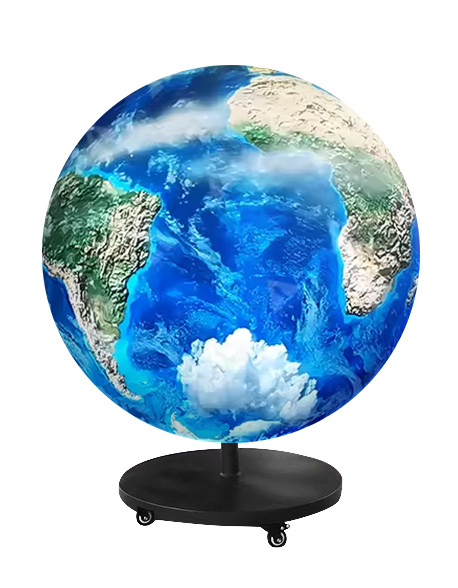
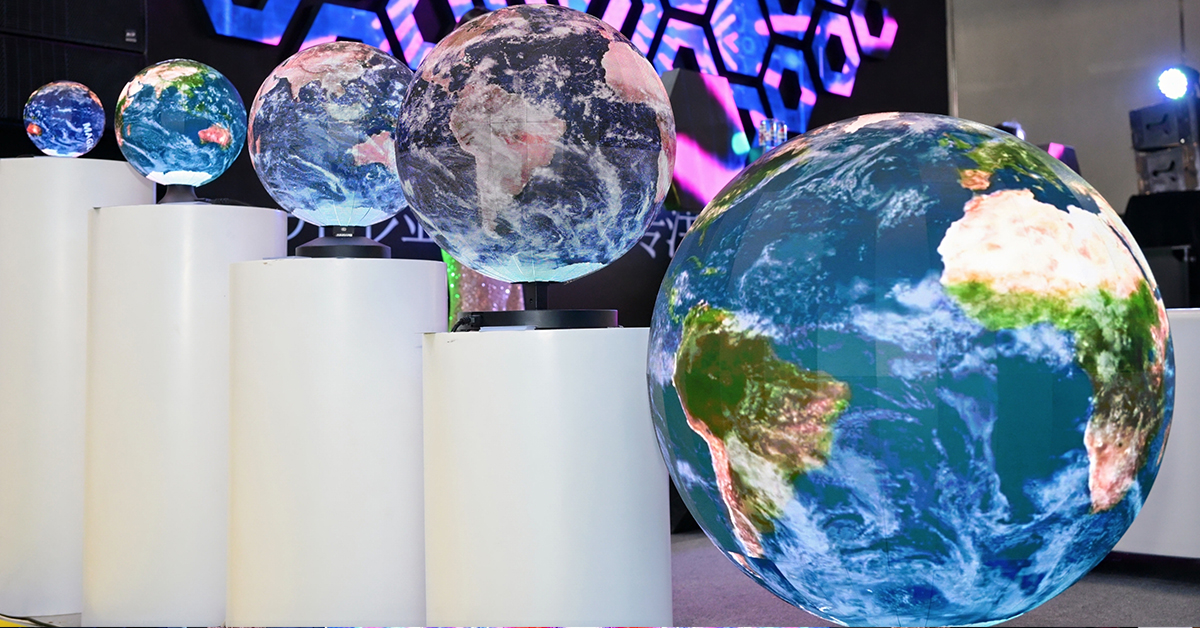
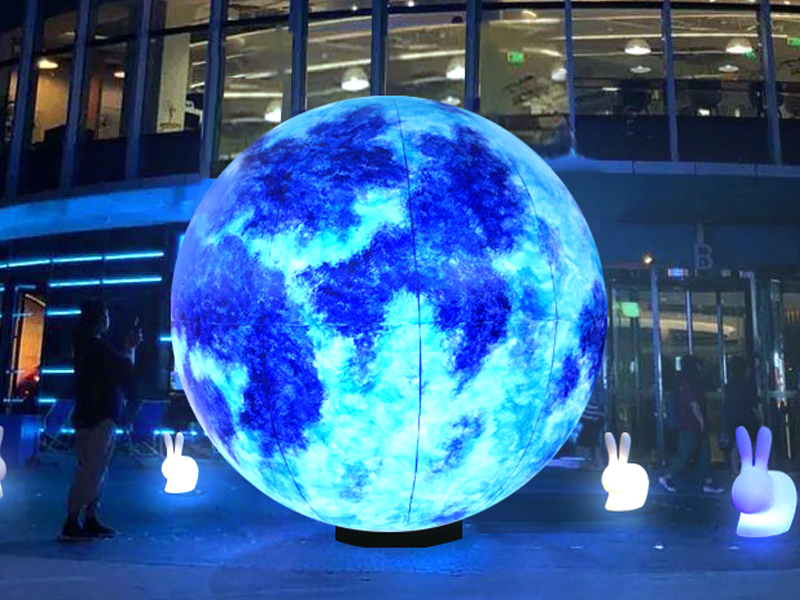
LED sphere displays look similar from a distance, but their internal architecture can be completely different. In practice, two dominant engineering approaches exist: the watermelon-skin LED sphere and the six-sided full-view LED sphere.
Although both aim to create a spherical visual surface, they differ fundamentally in structure, pixel layout, rendering logic, and maintenance strategy. As a result, they deliver very different performance in real-world applications.
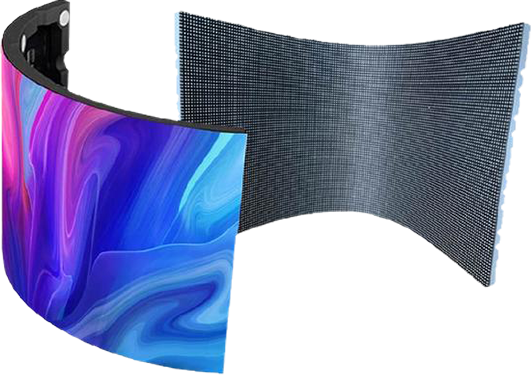
The watermelon-skin structure builds the sphere using curved PCB modules, similar to peeling and assembling slices of a watermelon.
Engineers design each module with curvature so that:
Modules follow the natural longitude lines of the sphere
Rows gradually narrow toward the poles
The structure forms circular bands around the sphere
As a result, this approach tries to physically replicate the spherical geometry.
However, this also introduces complexity. Because each module is curved, manufacturing precision and assembly accuracy must remain extremely high.
In contrast, the six-sided full-view LED sphere takes a different strategy. Instead of building curved surfaces, it:
Divides the sphere into six directional faces (top, bottom, front, back, left, right)
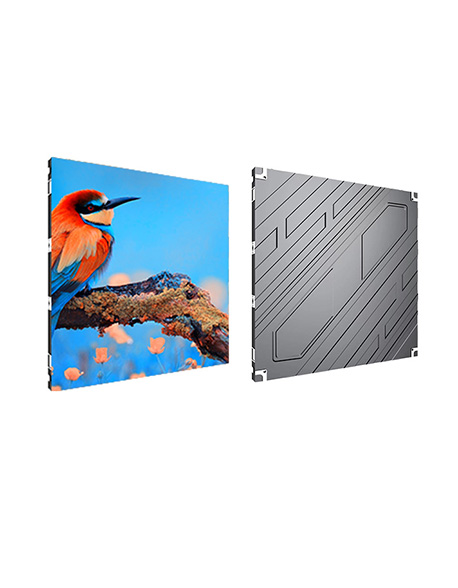
Builds each face using flat, rectangular LED cabinets
Assembles the sphere using 24 standardized planar modules
So rather than replicating curvature physically, this system approximates a sphere using flat geometry.
This design significantly simplifies production and installation.
The watermelon-skin model prioritizes geometric authenticity, while the six-sided model prioritizes engineering standardization and scalability.
Because the modules follow curved paths, pixel distribution becomes inherently non-uniform.
Specifically:
Pixels align along curved meridian lines
Rows do not form straight horizontal or vertical grids
Near the poles, pixel spacing becomes compressed and irregular
As a result, the system cannot naturally align with standard rectangular video sources.
Therefore, engineers must apply special image remapping algorithms before playback.
The six-sided structure, however, maintains a standard rectangular grid across all modules.
This means:
Pixels remain aligned in uniform rows and columns
Each face behaves like a traditional LED wall
Video content can map directly without complex transformation
Consequently, the system supports native compatibility with standard video formats.
Although the curved design appears more “physically accurate,” it introduces a major limitation: polar distortion.
As the structure converges toward the top and bottom:
Pixel geometry becomes compressed
Visual stretching increases
Image clarity decreases in polar regions
Therefore, usable display efficiency drops significantly, especially for full-sphere content.
In contrast, the six-sided design eliminates polar distortion entirely.
It achieves this by:
Treating each face as an independent display plane
Ensuring consistent pixel density across all faces
Avoiding geometric compression at the poles
As a result, it delivers:
More uniform image quality
Higher effective display utilization
Better support for global spherical content mapping
Curved geometry improves physical realism, but planar segmentation improves visual consistency.
Because pixel positions are non-linear, the system requires:
Custom mapping algorithms
Polar correction logic
Pre-processed video content
In practice, content cannot be played directly. Instead, it must pass through a dedicated rendering pipeline.
The six-sided architecture behaves much more like a conventional LED video wall.
It supports:
Direct playback of standard video sources
Minimal or no geometric transformation
Easier integration with existing media servers
Therefore, operators can deploy content much faster.
One system demands content adaptation. The other adapts to existing content workflows.
Since each module is curved, installation becomes more demanding.
Technicians must:
Align curved edges precisely
Maintain strict curvature continuity
Handle non-standard module shapes
This increases both installation time and maintenance complexity.
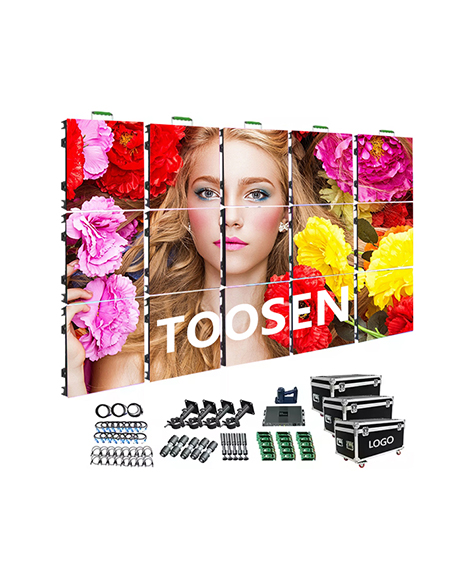
The six-sided system uses standardized rectangular cabinets.
This leads to:
Faster assembly and disassembly
Easier transportation in flight cases
Lower maintenance difficulty
Better suitability for rental and touring events
Curved systems prioritize form accuracy, while modular systems prioritize operational efficiency.
This design appears more often in early or specialized installations where:
Visual form authenticity is prioritized
Content complexity is low
Engineering flexibility is limited
However, it is gradually becoming less common in new deployments.
The six-sided full-view system dominates modern use cases such as:
Shopping mall atriums
Immersive exhibition spaces
Stage performance environments
Cultural and tourism installations
It supports both high-resolution playback and flexible content control, making it more commercially viable.
Although both systems create spherical visual experiences, they follow fundamentally different engineering philosophies.
The watermelon-skin LED sphere focuses on geometric realism, but it sacrifices:
Content flexibility
Rendering efficiency
Operational simplicity
In contrast, the six-sided full-view LED sphere prioritizes:
Standardized structure
Software compatibility
Installation efficiency
As a result, modern LED engineering increasingly favors the six-sided architecture, especially in commercial and large-scale immersive applications.
 +86 18688923792
  andy@tosled.com


