





Industry news


View: 2

Release time:2026-06-18
Mechanical LED displays have become one of the most eye-catching innovations in the digital signage industry. Unlike traditional LED screens, they combine LED technology with moving mechanical structures to create dynamic visual effects that cannot be achieved through video content alone.
From rotating panels and sliding LED walls to kinetic cubes and transformable stage displays, mechanical LED screens deliver a powerful blend of motion, creativity, and technology.
However, purchasing a mechanical LED display involves much more than selecting a screen size or pixel pitch. Since these systems integrate both electronic and mechanical components, buyers must evaluate performance, reliability, maintenance requirements, and long-term operating costs.
Before investing in a mechanical LED screen, consider the following key factors.
Before comparing suppliers or technical specifications, identify exactly how and where you plan to use the display.
The intended application will influence almost every purchasing decision.
The installation environment determines the required protection level.
For indoor applications such as:
Shopping malls
Brand showrooms
Exhibition halls
Corporate lobbies
standard indoor protection is usually sufficient.
For outdoor projects, however, you should choose displays with at least an IP65 protection rating to withstand:
Rain
Dust
Humidity
Temperature fluctuations
Outdoor mechanical displays face additional challenges because moving parts require extra protection against environmental exposure.
Viewing distance directly affects the ideal pixel pitch.
As a general guideline:
Viewing Distance | Recommended Pixel Pitch |
2–5 meters | P2–P4 |
5–10 meters | P4–P6 |
10+ meters | P8–P10 |
Selecting a pixel pitch that matches your audience distance helps optimize image quality while controlling project costs.
Not all mechanical LED displays perform the same way.
Some projects focus primarily on:
Brand storytelling
Artistic installations
Product launches
Others require:
Real-time video playback
Interactive content
Live event broadcasting
Because mechanical movement adds another layer of complexity, content creation often requires customized animation and synchronization.
Therefore, buyers should evaluate content needs early in the planning stage.
Mechanical LED displays support various installation options, including:
Wall-mounted systems
Ceiling suspension
Floor-standing structures
Freestanding art installations
Since moving mechanisms add weight and complexity, structural requirements are often more demanding than those of conventional LED displays.
Always verify building load capacity before installation.
The mechanical system is the heart of a kinetic LED display.
While buyers often focus on LED specifications, mechanical reliability ultimately determines long-term performance.
The type and quality of motor directly affect movement accuracy and lifespan.
Common options include:
Advantages:
Lower cost
Simple control system
Disadvantages:
Less precise movement
More noticeable vibration
Lower operating speed
Advantages:
Higher precision
Smoother motion
Better positioning accuracy
Longer service life
Although servo motors typically cost more, they often provide greater reliability in professional installations.
Every mechanical LED display has a designed operating cycle.
Ask suppliers:
How many movements can the system perform daily?
What is the expected lifespan of moving components?
Has the system undergone durability testing?
Displays used for permanent installations often operate thousands of times per day, making durability a critical consideration.
Noise can significantly affect the user experience.
This factor becomes especially important in:
Museums
Corporate showrooms
Retail stores
Luxury environments
A well-designed mechanical LED screen should typically operate below 40 dB for indoor applications.
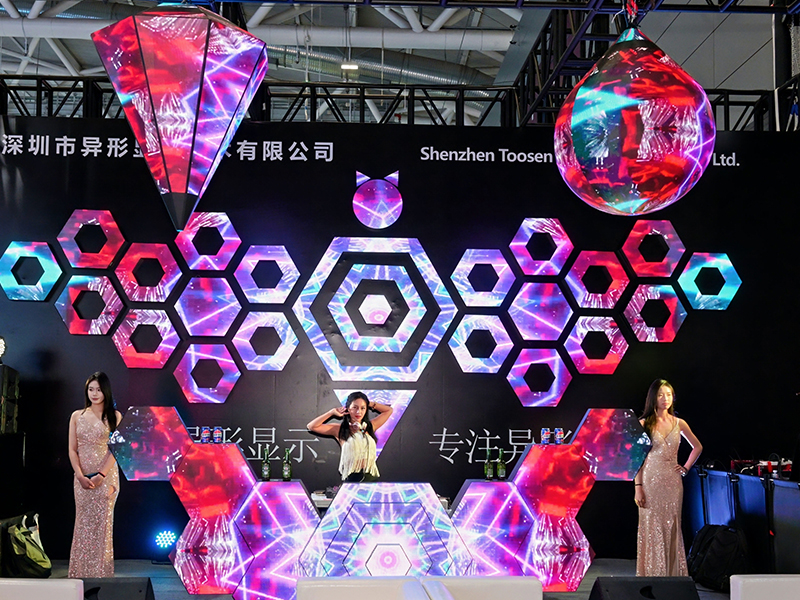
Although the mechanical structure attracts attention, image quality remains equally important.
Higher-resolution displays deliver sharper visuals, especially when audiences view the screen from close distances.
Evaluate:
Pixel pitch
Total resolution
Viewing angle
Display size
to ensure the screen meets your content requirements.
Brightness requirements vary depending on the environment.
Recommended brightness levels include:
Application | Recommended Brightness |
Indoor | 500–1500 nits |
Semi-outdoor | 2000–4000 nits |
Outdoor | 5000+ nits |
If the display operates in direct sunlight, consider models that provide 6000–8000 nits or higher.
Premium mechanical LED displays should provide:
High grayscale levels
Consistent color reproduction
Wide color gamut
Smooth image transitions
These characteristics become especially important for luxury brands and high-end presentations.
Mechanical displays generate heat from both LED operation and moving components.
As a result, thermal management becomes more complex than with standard LED screens.
Look for systems that offer:
Efficient airflow design
Temperature monitoring
High-quality power supplies
Intelligent cooling solutions
For outdoor projects, ensure the display provides adequate waterproof and dustproof protection.
Not all LED manufacturers specialize in mechanical display systems.
Because mechanical LED screens involve multidisciplinary engineering, supplier expertise matters significantly.
Ask suppliers to provide real-world examples that match your project in terms of:
Size
Application
Operating environment
Complexity
Successful reference projects often reveal far more than product brochures.
Mechanical components naturally experience more wear than static LED screens.
Before purchasing, confirm:
Spare parts availability
Technical support response times
Remote troubleshooting capabilities
On-site service options
Fast support can significantly reduce downtime if issues occur.
Many buyers focus only on the LED warranty while overlooking the mechanical system.
Request detailed warranty information covering:
Motors
Drive systems
Control systems
LED modules
Power supplies
For commercial projects, a minimum two-year warranty is generally recommended.
The software platform determines how easily you can manage content and control movement effects.
Ask whether the system supports:
Video playback
Interactive content
Real-time synchronization
DMX lighting integration
Third-party control systems
Open API interfaces
Flexible software significantly increases future expansion possibilities.
Mechanical LED displays consume energy through both illumination and movement.
Consequently, total power requirements can be considerably higher than those of traditional LED screens.
Before installation, verify:
Maximum power consumption
Average operating consumption
Circuit capacity requirements
Backup power needs
Proper electrical planning prevents operational issues later.
One of the most commonly overlooked issues involves maintenance accessibility.
Mechanical LED displays are typically thicker and more complex than standard LED walls.
Without sufficient access space, routine maintenance becomes difficult and expensive.
When designing the installation, leave adequate room for:
Motor replacement
Module servicing
Wiring inspection
Cooling system maintenance
Good maintenance planning can save significant costs over the lifespan of the display.
Many buyers focus solely on hardware costs while underestimating content creation expenses.
Unlike conventional LED screens, mechanical displays often require:
Custom animations
Motion synchronization
3D visual design
Specialized programming
As a result, content production may represent a significant portion of the total project budget.
Before purchasing, ask whether the supplier offers:
Content design services
Motion programming
Technical support for content creation
Mechanical LED displays contain precision-engineered components that require careful handling.
Before finalizing your purchase, verify:
Packaging methods
Transportation protection measures
Installation team experience
On-site commissioning services
An experienced installation team can prevent costly damage and ensure optimal performance from day one.
A mechanical LED display is much more than a digital screen. It is a sophisticated combination of LED technology, precision mechanics, software control, and creative content.
To make a successful investment, buyers should evaluate not only display quality but also motor reliability, maintenance requirements, software compatibility, thermal management, and supplier expertise.
By carefully considering these factors before purchasing, you can select a mechanical LED display that delivers stunning visual impact, reliable operation, and long-term value for your project.
 +86 18688923792
  andy@tosled.com


