






Industry news


View: 150

Release time:2026-04-21
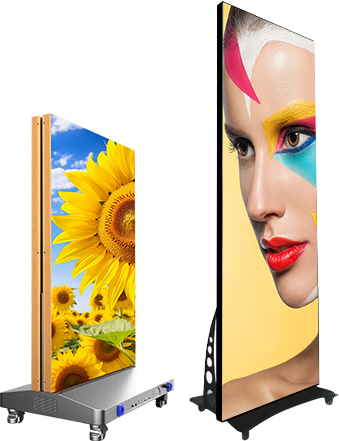
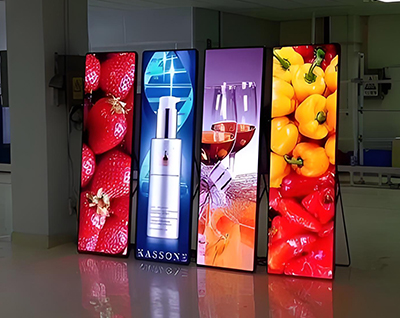
Digital poster screens are not just display tools—they are attention-engineering systems. By carefully controlling color, typography, and motion, they directly influence how the human brain filters, prioritizes, and remembers visual information. Understanding these mechanisms explains why poster LED displays have become essential in modern retail, transit hubs, and public spaces.
Color processing happens early in the visual cortex, which makes it one of the fastest ways to capture attention.
High-contrast combinations (e.g., red on white, yellow on black) trigger rapid detection
Warm colors (red, orange) stimulate urgency and action
Cool colors (blue, green) promote calmness and trust
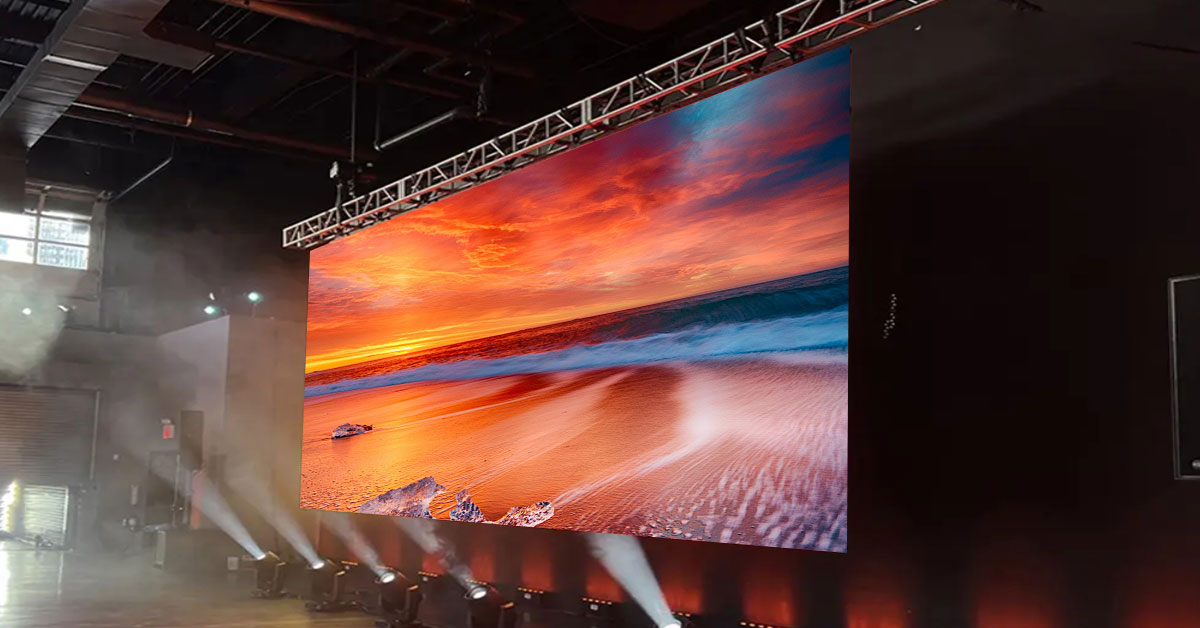
Poster LED displays leverage high brightness and wide color gamut to amplify these effects. As a result, they outperform static posters, especially in visually noisy environments like shopping malls or transportation hubs.
Key takeaway: Strong color contrast increases visual saliency, helping content break through attention clutter.
The brain prefers simple, legible patterns. Typography directly affects how quickly information is processed.
Sans-serif fonts improve readability at a distance
Larger font sizes reduce cognitive effort
Clear hierarchy (headline → subheading → call-to-action) guides eye movement
Poster screens allow dynamic adjustment of font size, spacing, and layout in real time. This adaptability ensures optimal readability under different viewing distances and lighting conditions.
Key takeaway: Better typography reduces cognitive load, increasing message retention.
The human visual system is highly sensitive to motion—an evolutionary trait linked to survival.
Subtle animations draw attention without overwhelming the viewer
Directional motion guides gaze across the screen
Controlled speed prevents fatigue or irritation
Poster LED displays use programmed motion (scrolling text, transitions, micro-animations) to maintain engagement. However, excessive speed or chaotic movement can reduce comprehension.
Best practice:
Use slow-to-moderate motion speeds
Avoid rapid flashing unless required for alerts
Key takeaway: Motion activates attentional networks, but must remain controlled to avoid cognitive overload.
By combining color, typography, and motion, poster LED displays:
Capture attention faster
Deliver information more clearly
Increase recall and engagement
Unlike traditional posters, they also support:
Real-time content updates
Context-aware messaging (time, location, audience)
Data-driven optimization
Poster LED displays succeed because they align with how the brain naturally processes visual information. When designed correctly, they don’t just display content—they guide perception, influence behavior, and enhance communication efficiency.
 +86 18688923792
  andy@tosled.com


