



Industry news


View: 166

Release time:2026-04-20
Creative LED displays rely on different control systems depending on the screen shape, installation complexity, and application scenario. As LED structures become more irregular and immersive, control technology has evolved to ensure accurate mapping, synchronization, and visual consistency.
Below are the main types of control systems used in practice.
This is the most common and cost-effective solution.
It typically uses standard LED sending cards designed for rectangular screens, with basic support for:
Simple curve compensation
Slight image stretching or mapping adjustment
It works best for:
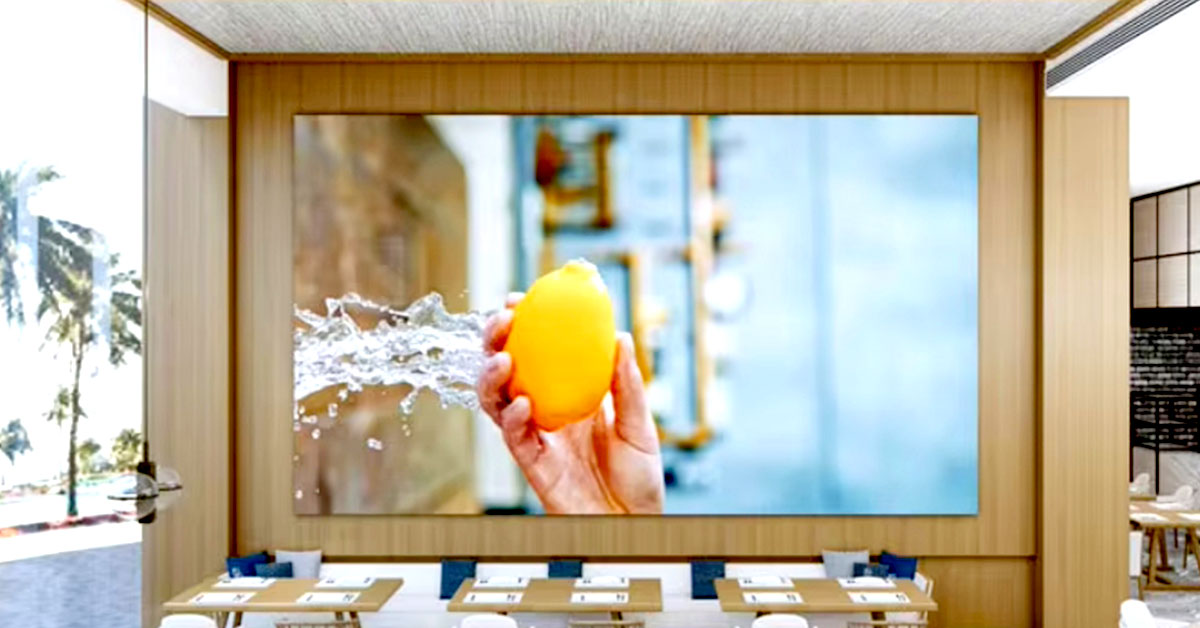
Flat LED screens
Mild arc-shaped displays
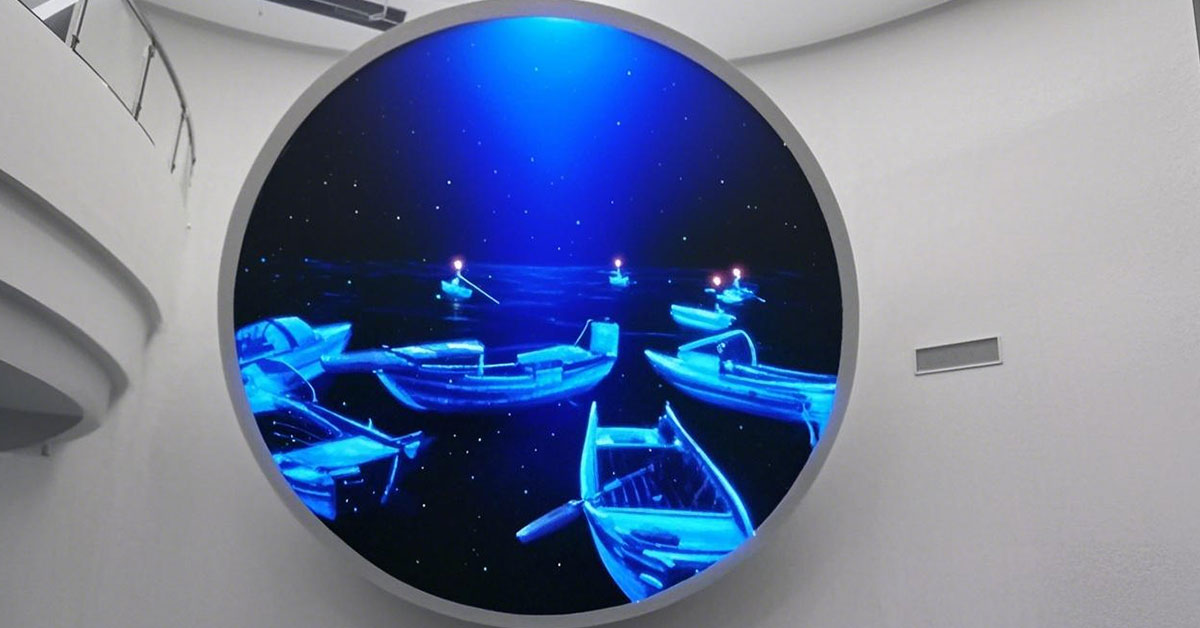
Simple cylindrical or semi-circular structures
Key advantages:
Low cost
Easy to purchase and install
Fast configuration and debugging
No need for complex pixel-level calibration
However, it has limited capability for complex shapes.
2. Irregular Pixel Mapping Control System (Custom Shapes & 3D Displays)
This is the core system for true creative LED installations.
It allows engineers to assign individual coordinates to each LED pixel, enabling precise mapping regardless of physical shape.
It supports:
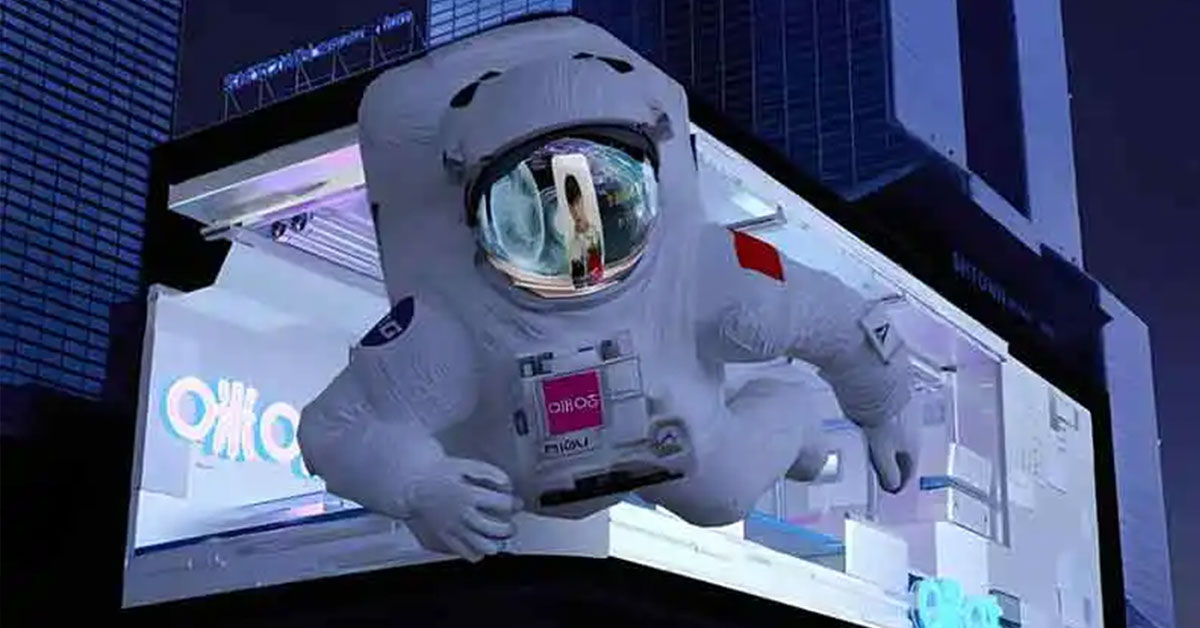
Irregular outlines
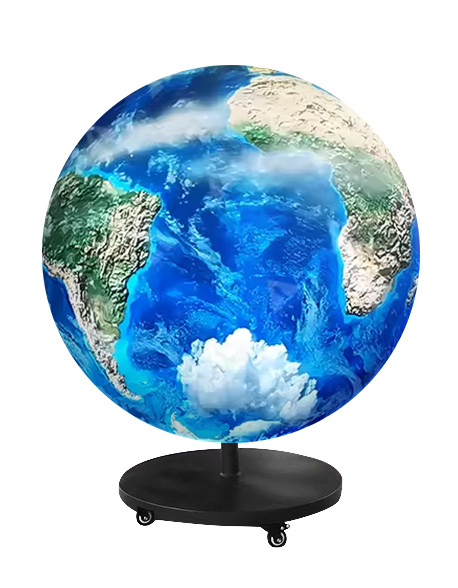
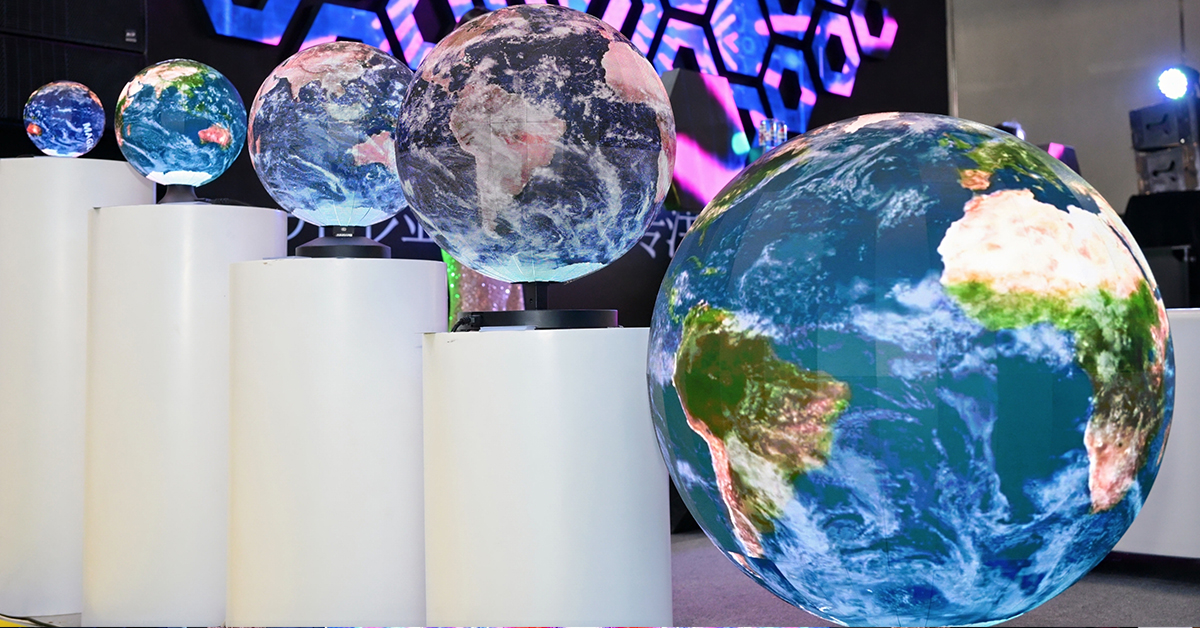
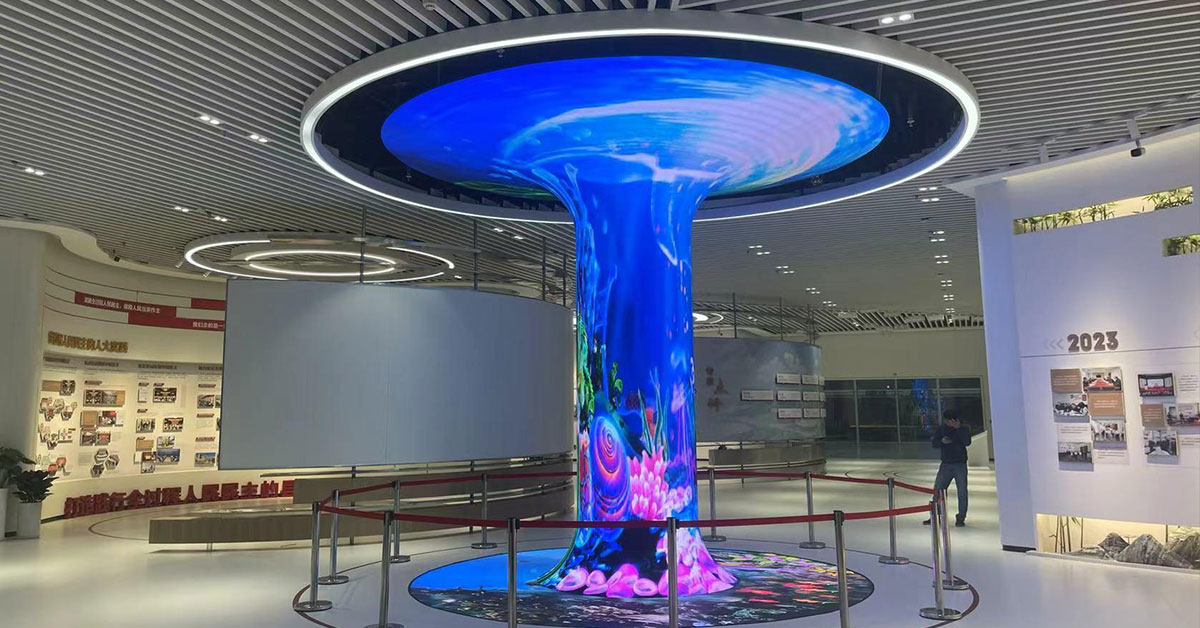
Spherical or curved surfaces
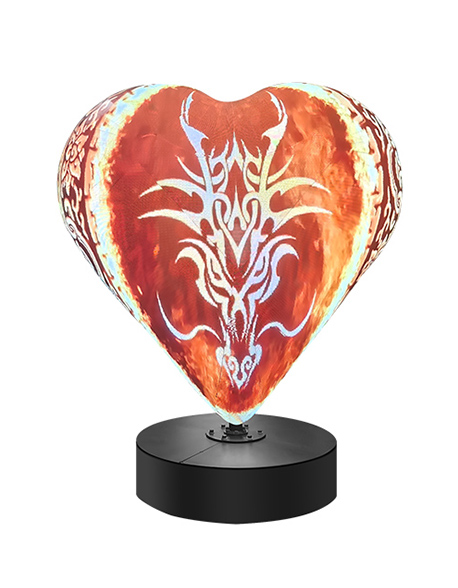
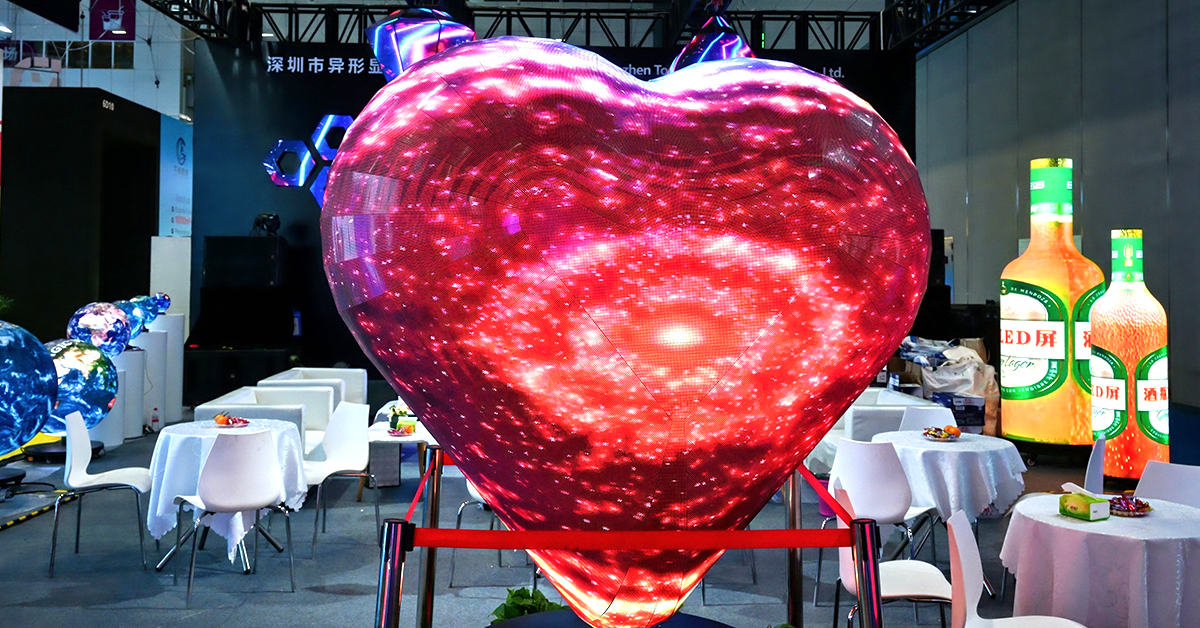
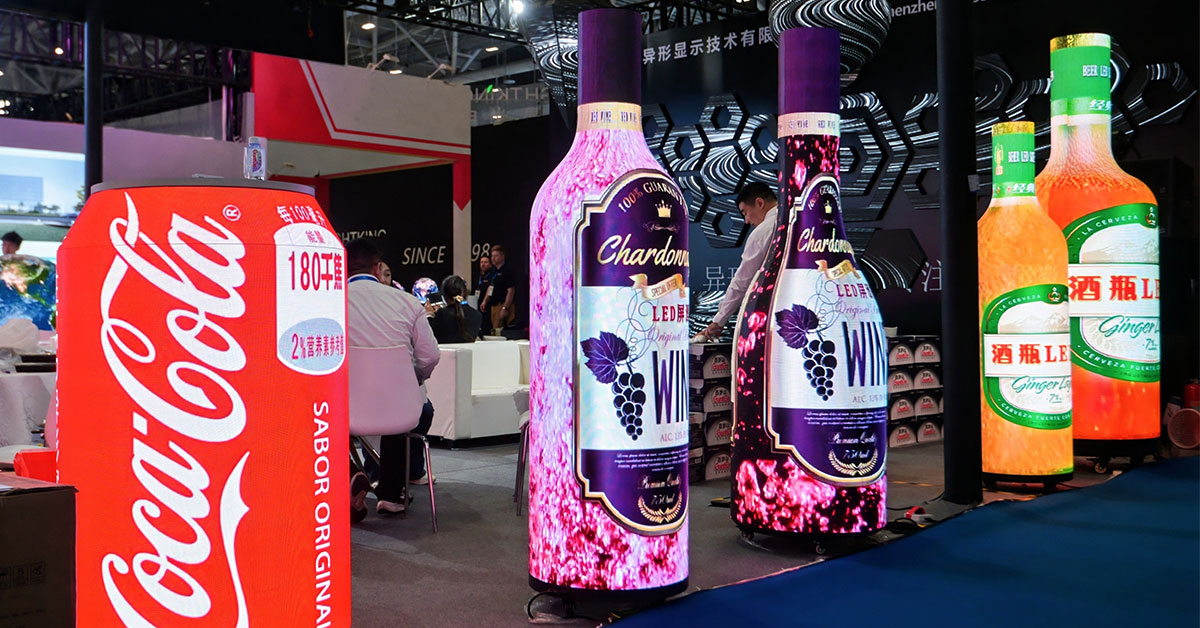
Artistic and non-standard installations (heart-shaped, wave-shaped, abstract forms)
Key advantages:
No image distortion even on complex geometry
Fully customizable pixel arrangement
Supports high-end creative visual design
This system is essential for installations where shape is part of the design language.
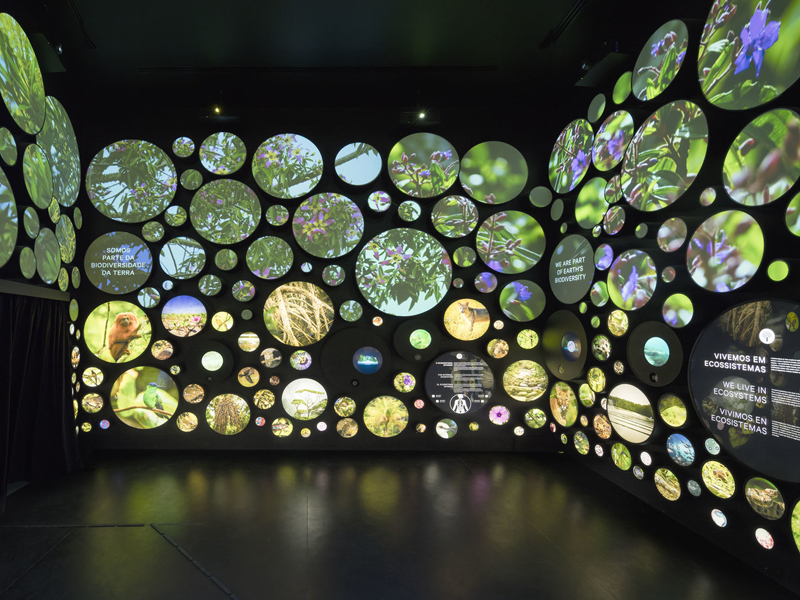
3. Multi-Screen Synchronization & Splicing Control System
Used when multiple LED displays work together as one visual environment.
It ensures:
Frame-level synchronization across all screens
No delay or misalignment between panels
Unified playback across large or multi-surface setups
Typical applications include:
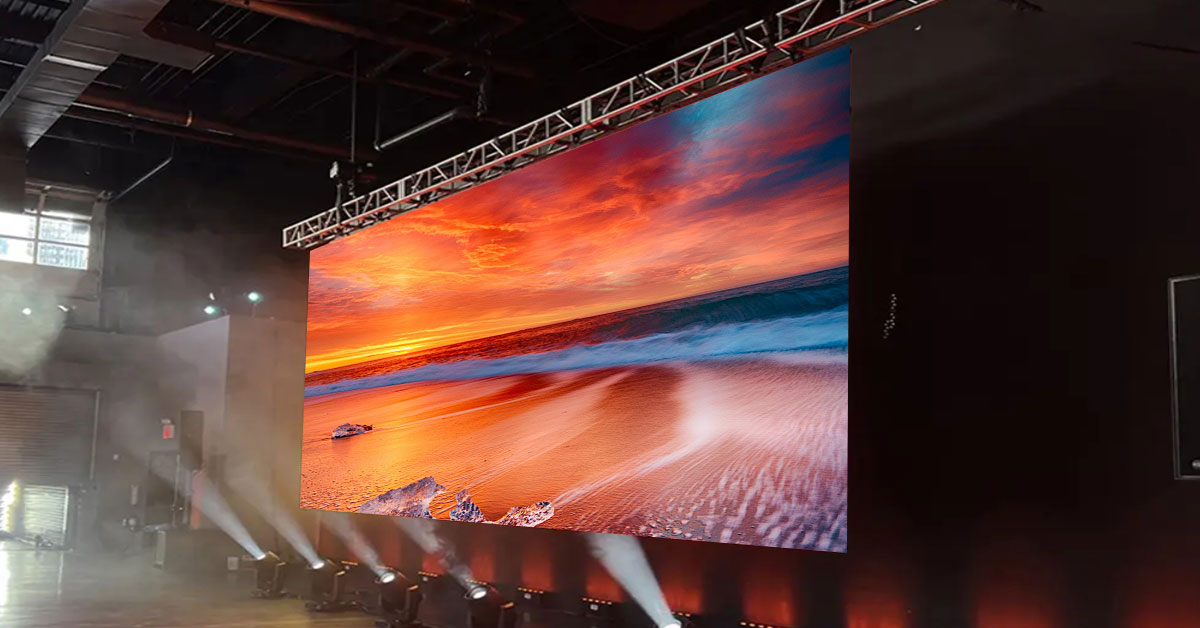
Stage backgrounds
Immersive tunnel or wrap-around LED environments
Large event installations with multiple connected displays
This system is critical for maintaining visual continuity in complex setups.
This system focuses on visual optimization rather than basic playback control.
It handles:
Geometric distortion correction (especially for curved screens)
Brightness uniformity adjustment
Color calibration and balancing
Edge blending and dark-area compensation
In practice, it ensures that even physically curved or irregular displays appear visually “flat” and natural to the viewer.
Designed for fast deployment in short-term events.
Key features include:
USB or mobile-based content updates
Plug-and-play operation
Quick installation and dismantling
Ideal for:
Trade shows
Corporate events
Conferences and exhibitions
Temporary creative LED installations
Key advantage:
Speed and simplicity—operators can manage content without technical expertise.
Creative LED display control systems range from simple universal solutions to highly advanced pixel-level mapping platforms. As screen shapes become more experimental and immersive, control systems are evolving toward greater precision, synchronization, and automation—enabling designers to fully unlock the potential of creative LED installations.
 +86 18688923792
  andy@tosled.com


